Home / Systems Engineering
Systems Engineering
Industrial projects fail at the interfaces: where a foundation meets a machine, a machine meets its power supply, or a design meets real operating loads. Systems engineering is how we manage those interfaces.
Integration
Civil, electrical, mechanical and computational, as one system.
We start from what the whole system must do, divide it into parts each discipline can own, and define exactly how those parts connect. Analysis checks the design; testing and commissioning confirm it.
System architecture and interfaces
Where the disciplines meet
A typical interface matrix for an industrial installation. Each cell is a requirement one team must meet for another.
| Interface | Civil | Electrical | Mechanical | Computational |
|---|---|---|---|---|
| Civil | — | Cable trenches, earthing pits, substation plinths | Foundation stiffness, anchor bolts, crane rails | Foundation loads and dynamic response |
| Electrical | Load and space for panels and transformers | — | Drives, sensors, interlocks, PLC I/O | Heat loads, vibration at panels |
| Mechanical | Static and dynamic machine loads | Power, control and safety signals | — | Strength, fatigue and vibration checks |
| Computational | Code checks of structures | Thermal and airflow of enclosures | Design changes from analysis results | — |
Multidisciplinary design and integration
Our integration process
- 01Requirements
What the system must do, under which loads, codes and constraints.
- 02Architecture
Split into subsystems; define every interface between disciplines.
- 03Design
Each team designs its part against the interface definitions.
- 04Analysis
FEA, CFD and code checks on the integrated design.
- 05Build
Construction, installation and wiring, sequenced across teams.
- 06Commission
Testing and handover with documentation for approval.
Verification and validation
Proving the design, then proving the build
Verification by analysis
Designs are checked by FEA and CFD to ASME, IS and Euro codes, including fatigue, seismic and dynamic load cases.
Inspection and testing
Structural inspection on site, electrical testing and functional checks of controls before energisation.
Commissioning
End-to-end commissioning with documentation built for regulatory and audit approval.
Integrated engineering in practice
Examples of integrated scope
Heavy press installations
Press foundations (civil), power and controls (electrical) and structural and dynamic checks (CAE) for the forging industry.
Robot cells and lines
Gantry and line structures analysed for E-stop, jerk and fatigue loads (CAE), with mechanical and electrical integration.
Intelligent machines
Our AI & Robotics venture applies the same method to a new kind of system: a field robot that must see, decide and act.
From traditional to intelligent
The bridge to intelligent technologies
Adding sensors, software and AI to a machine adds new interfaces, not fewer. Systems engineering is how we connect our established disciplines with robotics and artificial intelligence.
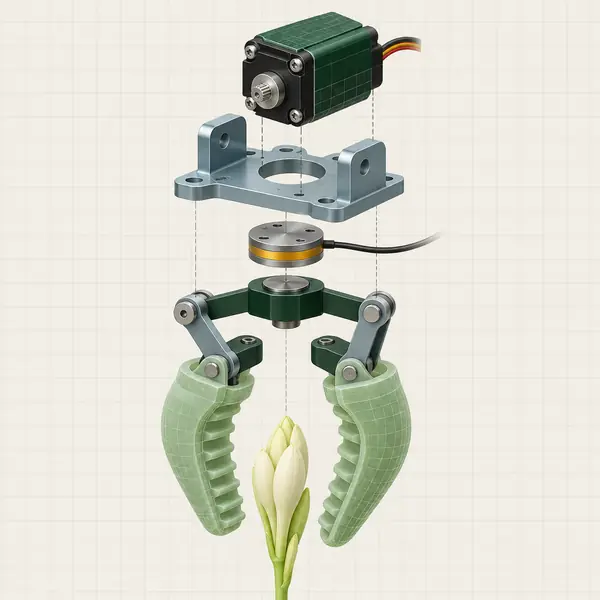 Concept visualisation · AI & Robotics
Discuss an engineering project
Civil, electrical, mechanical or simulation: tell us what you are building and we will bring the right engineers to the table.